-
Title
-
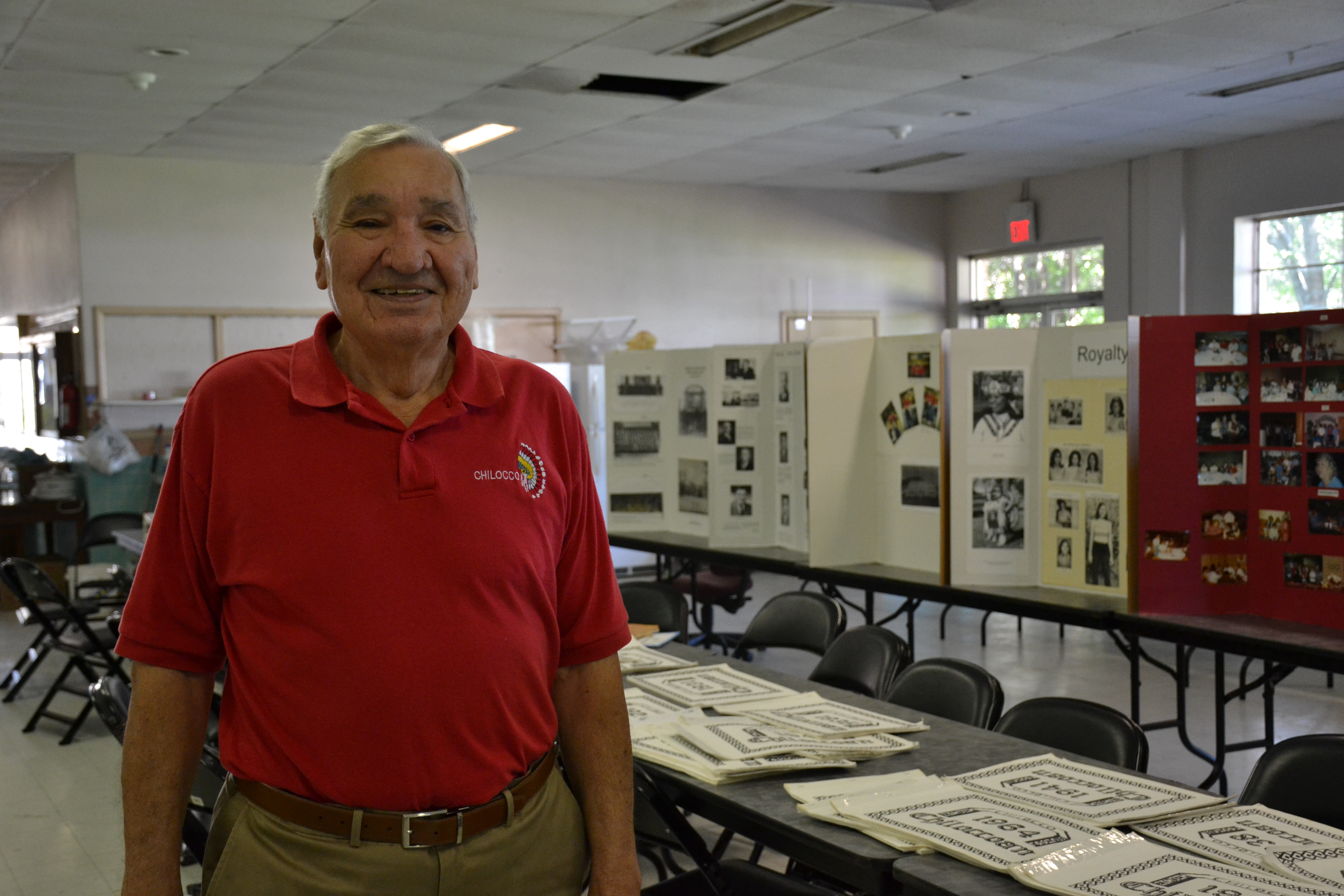
Oral history interview with Charles LeClair
-
Description
-
Charles LeClair (Ponca, Potawatomi, Kaw), a 1948 graduate of Chilocco Indian Agricultural School, talks about his path to Chilocco and some of his experiences there, such as being involved with boxing and learning blacksmithing. He discusses joining the school's National Guard unit and how that led him to volunteer for the Air Force. LeClair describes his military service and explains how he decided to become a Baptist pastor. He discusses his next steps toward being commissioned as a chaplain in the Army. He also comments on his experiences as a chaplain and his time in Vietnam.
-
Subject
-
Indians of North America
-
Chilocco Indian Agricultural School
-
Indians of North America--Education
-
Off-reservation boarding schools
-
Boarding school students
-
Indians of North America--Wars--Veterans
-
Korean War (1950-1953)
-
Vietnam War (1961-1975)
-
Military chaplains
-
Religious life
-
Format
-
video
-
Identifier
-
okso_sok_268
-
Interviewer
-
Milligan, Sarah
-
Interviewee
-
LeClair, Charles, 1931-
-
OHMS Object Text
-
5.2 Oral history interview with Charles LeClair okso_sok_268 Spotlighting Oklahoma Oral History Project Chilocco Indian Agricultural School Alumni OOHRP, Oklahoma State University Indians of North America Chilocco Indian Agricultural School Indians of North America--Education Off-reservation boarding schools Boarding school students Indians of North America--Wars--Veterans Korean War (1950-1953) Vietnam War (1961-1975) Military chaplains Religious life LeClair, Charles, 1931- Milligan, Sarah video 1:|11(8)|17(3)|25(7)|31(2)|39(2)|49(1)|56(7)|64(4)|71(11)|78(7)|85(13)|99(3)|105(1)|115(2)|125(1)|132(14)|146(1)|155(9)|161(12)|170(12)|182(1)|188(11)|194(7)|203(5)|210(7)|215(8)|224(12)|230(6)|237(8)|244(14)|250(6)|259(13)|266(15)|272(14)|281(6)|295(13)|302(8)|313(6)|325(2)|331(10)|339(4)|345(2)|353(14)|362(4)|375(5)|380(10)|388(7)|395(4)|402(1)|412(5)|418(15)|427(11)|433(7)|447(10)|454(4)|466(1)|470(13)|478(2)|485(4)|492(7)|500(1)|505(14)|514(6)|521(8)|532(11)|538(7)|546(6)|557(2)|570(3)|575(6)|580(7)|590(5)|602(3)|608(11)|617(8)|623(2)|643(8)|649(3)|654(12)|662(11)|671(14)|681(3)|687(8)|699(10)|707(11)|714(4)|726(11)|733(1)|739(15)|749(8)|755(16)|766(10)|773(5)|779(16)|786(16)|793(1)|803(4)|809(10)|816(2)|828(11)|834(5)|840(6)|846(11)|854(4)|858(14)|869(6)|874(14)|882(1)|887(8)|896(12)|904(4)|912(15)|921(14)|929(2)|938(4)|947(16)|954(10)|961(2)|967(10)|976(7)|984(4)|992(12)|999(2)|1007(9)|1016(3)|1022(10)|1032(13)|1046(5)|1062(1) 0 https://youtu.be/xhFwGFocBv4 YouTube video eng Charles LeClair (Ponca, Potawatomi, Kaw), a 1948 graduate of Chilocco Indian Agricultural School, talks about his path to Chilocco and some of his experiences there, such as being involved with boxing and learning blacksmithing. He discusses joining the school's National Guard unit and how that led him to volunteer for the Air Force. LeClair describes his military service and explains how he decided to become a Baptist pastor. He discusses his next steps toward being commissioned as a chaplain in the Army. He also comments on his experiences as a chaplain and his time in Vietnam. MilliganI' ; m going to do a short, really quick introduction. My name is Sarah Milligan. I' ; m with the Oklahoma Oral History Research Program at the OSU Library. Today' ; s date is May 28, 2016. I am here talking with Charles LeClair. We' ; re at the Chilocco Indian School reunion at the Chilocco campus, and we' ; re doing interviews with Chilocco military veterans. That' ; s as formal as it gets. I want to start first with just a little bit of background about you. Where are you from? Who are your parents? Did you have siblings? All that good stuff. LeClairWell, I was born in Marland, Oklahoma, which is south of Ponca City. Actually, it' ; s south and--the farm that we lived on was my father' ; s Ponca allotment. It was eighty acres of farmland that, by token of being a Ponca, he had property allotted to him. He died when I was four years old. I was born at home in Marland, Oklahoma. Actually, it was on a rural route east of Marland. My father was a Ponca and Potawatomi Indian. My mother was a Kaw and Potawatomi. We had more Potawatomi blood than any other, so we were always told we were Potawatomis. I went to grade school a half a mile from our farm, which was actually, it bordered the little one-room schoolhouse where a teacher taught nine grades. Each grade was in a row. MilliganOh! LeClairWhen I got out of Tearney school, there were only two ninth graders. We occupied the ninth-grade row. That' ; s where I went to school through nine grades. That other gentleman was Bryce Beck. We were probably the fifth of five Indian families that lived in that community. We went to school with them. Mostly, German families mainly were the farmers in our community. Bryce Beck turned out to be a Navy pilot. He got out of the Navy, and he started working for Lockheed. I went to school there in the Tearney school with Bryce. We were good friends. I went to Chilocco. I went to Oklahoma Baptist University. I went to Southwestern [Baptist Theological] Seminary in Fort Worth, Texas. I became a preacher while Bryce was working for Lockheed. Leaping ahead a few years, I was working for Lockheed by token of the fact that I was working at the Space Center, the prime contractor for the space shuttle. I worked for Lockheed after retiring from the Army and retiring from civil service, retiring from a lot of places. I was working for Lockheed at the Space Center. Bryce was working for Lockheed at Sunnyvale, California, which was our main company. Lockheed is a big corporation, and Sunnyvale was more or less its headquarters. Well, we had a reunion while I was working at Lockheed and Bryce was still working at Lockheed out in California. We had invited a whole lot of friends and families to come to our family reunion, and Mrs. Beck was there, Bryce' ; s mother. I went up to her, and I said, " ; Mrs. Beck, did you know that 100 percent of Tearney school' ; s ninth grade class works for Lockheed?" ; She said, " ; Yes!" ; I said, " ; Both of us!" ; (Laughter) We got a lot of fun out of that. That' ; s what happened. I went to Chilocco Indian School where we are right now. Milligan What year did you go there? LeClairI started in Chilocco in 1944, and I graduated in 1948. While I was here, I was on the boxing team. That' ; s really not saying a whole lot about our abilities because we didn' ; t have any real big boys because Oklahoma is a football state and always has been. The towns where these boys, the big boys, came from knew about the football players who were Indian, and they influenced them to go to school at home. Guess what? We got the little guys. We had football, but I remember a score when we went to Ponca City because by the fact that we were that big a school, we had to compete with that school. We didn' ; t have the material that those schools had because they had them. That score was forty-five to nothing. I' ; ll never forget that one. We won a few games but hardly any. Boxing was our sport because you had to be matched up size by size. We entered most of the tournaments. In those days, there was a lot of boxing going on. Almost all of the major newspapers like the Tulsa World and the Oklahoman sponsored teams. Since we are near Kansas, we competed with Haskell Institute [Haskell Indian Nations University], and in those days, there were a lot of Indian schools in Oklahoma. About eight or nine were active, and they all had boxing teams. In fact, there was an all-Indian tournament in Muskogee every year. We always had a national champion out of this school, this little olʽ school here. One year, we had two national champions. Boxing certainly was our sport, and also we had a Company C of the 45th [Infantry] Division, mostly Indian. We went to Fort Sill for the annual encampments, and on the subject of boxing, my good friend Fred Underwood, who graduated with me in 1948, he was a terrific boxer. We were friends, and we were both in the National Guard. We went to Fort Sill that year, 1947. When we got to Fort Sill, he said, " ; Come with me." ; Well, we walked wherever we went. We walked two or three miles, it seemed like, on Fort Sill. We came up on the little rise. Then abruptly you look down, and there were seats they called the Artillery Bowl. It was built for nothing more than boxing, and it had a ring in the center. It had no roof on it. We walked up to the ring. I knew by then what he wanted us to do. There were trophies sitting on the table next to the ring. He said, " ; Let' ; s enter this tournament." ; They were by weights on the trophies. I said, " ; Well, I don' ; t want to fight you!" ; He said, " ; Well, you enter 118, and I' ; ll enter 126. I' ; ll work out real hard and lose some weight," ; because it was the next week. We had a two-week encampment. I didn' ; t weigh quite 118, but I competed in the 118. That' ; s called bantamweight. We entered that tournament. He persuaded other people from this boxing school to enter in the tournament. We won the team trophy. He won the championship of the 126-pound, and I won the championship of the 118-pound. Milligan All right! LeClair I want to tell you another story about Fred Underwood. Milligan Okay. Now, was this when the Company C went down there as a company and did that? LeClair Yes, it was Company C. Living in a dormitory, when we' ; d go to bed, they' ; d have a room check. At nine thirty, you had to be in your room. At ten o' ; clock, they turned the lights out. Then at twelve o' ; clock, you had to be in your bed. Well, there' ; s a lot you can do between nine thirty and twelve o' ; clock. I knew one thing about teenage boys. They are interested in two things. They' ; re interested in girls and food, nothing else. By the time six o' ; clock had passed, at nine thirty we were hungry again. There was an all-night restaurant on the state line. It was a truck stop. The building is still there on the old highway. There was a guy that took care of the, just one guy that took care of the restaurant and filling up with gas. Actually, they even checked your oil in those days. He had a what-used-to-be-white rag that hung around his belt, and he' ; d check your oil and wipe the stick off, give you your oil, fill your tank with gas. If you wanted a hamburger, he went inside and wiped his hands on that rag, and he took the hamburger (Mimics slapping sound of making hamburger patty) and stuck it on the grill. Fred and I collected enough money from our hungry classmates. We' ; d charge them a little bit. When we got up there, we' ; d eat our hamburgers while the guy would fry the ones that we' ; d take back. Fred and I dated sisters. I won' ; t mention their names because I didn' ; t marry the one that I dated. Fred did. That' ; s all we talked--we had our hamburgers. Now, we talked about our girls. We' ; re coming back. Being boxers, we could run a little bit. If we were late, we' ; d make it up. We' ; re kind of trotting down the highway on a night that had no light anywhere. In those days, you didn' ; t have very much light out yonder in the country. I ran down the middle of the highway, and every once in a while I could see something there. Fred ran over here on the shoulder, and we' ; re huffing and puffing. We have bags of the hamburgers under each arm, four bags. All of a sudden, " ; Bang!" ; I heard the bang like a metal sign, and then I heard the rolling of hamburgers. In those days, they wrapped hamburgers in wax paper, and you can imagine how many he had, probably twenty-four or -five hamburgers rolling on the pavement. I said, " ; Fred, are you all right?" ; He didn' ; t answer. When I realized that he had knocked himself out--he had never, ever lost a fight. He ran into a metal sign that had the iron post in it. It hit him right in the nose, and down he went. I' ; ll swear here' ; s what he said when he woke up. I' ; m laying there laughing. A truck could have run over me ; I would still been laughing. When Fred came to, here' ; s what he said, I swear. He said, " ; What round did [he] get me in?" ; (Laughs) Even though he had been knocked out, he still had his sense of humor. I' ; ve told that story with Fred present, and Fred would always say, " ; I don' ; t remember that." ; (Laughter) I would say to him, " ; Yeah, that' ; s just proof that it knocked you out." ; Milligan Did you pick the hamburgers up and take them back then? Oh, you' ; re getting there. I' ; m sorry. (Laughter) LeClair I knew you were going to ask that. I knew you were going to ask that! (Laughter) What we did, we picked them up. There' ; s always sand on the highway, and we brushed the sand off. When we got back to Chilocco, we just gave them their hamburger and didn' ; t say a word. Nobody complained! (Laughter) Milligan Remind me not to ask you to get me lunch. (Laughter) LeClair As I' ; ve said, lunch and girls was on our minds. One time when we were going to Fort Sill for an encampment, it was the year that we had that boxing championship down there, ' ; 47. That' ; s a long time ago! As we got on the train, we were the first company to get on the train. We stopped in Ponca City. They got on the train and so forth right down the middle of Oklahoma. Somewhere after we left Oklahoma City, they served us sack lunches. Now, these were not just Chilocco people. This was the 45th Division feeding its troops. There were cheese sandwiches in there, and it was August. There was no cooling on that train and probably no cooling where they stored those sack lunches. Well, we ate our sandwiches, no problem, and all of a sudden the train stopped. Guys got off. They started getting off the train in front of us and behind us. Our car was Company C. The others were Ponca City and Guthrie and other towns, and the guys were all throwing up. Guess what? None of the Indian boys were doing it. (Laughs) Everybody said, " ; How do you explain that?" ; Well, these Indian boys, their stomachs are conditioned to bad food. (Laughter) That' ; s what we said! Milligan Tougher training. (Laughter) LeClairThat was us. That was one of my favorite stories of being a Company C member. Milligan Oh, yeah. Well, actually, tell me a little bit more about Company C. When you were in Chilocco, I know that Company C was stationed here on campus since the ʼ20s. At what point did you get involved with them? LeClairWell, there was a first sergeant. I guess you know what a first sergeant is. MilliganYeah, you can--. LeClairHe' ; s a top kick. He is a top sergeant in your outfit, in a company. A company is four platoons of men. No, I didn' ; t say that right. A platoon is four squads of men, and then there are a number of platoons in a company. He was the top sergeant in the company. Usually, a company is commanded by a captain, and the platoons are commanded by a first lieutenant. Well, no first lieutenant ever gets anywhere if he doesn' ; t have a proper first sergeant. The first sergeant makes officers, even though they' ; ve earned their bars somewhere else. Any wise officer will consult his first sergeant about how to run men. Our sergeant became Courtney. I can' ; t remember his first name, but he became our company commander. At that time, the 45th Division was running a contest of recruiting. Now, the 45th Division was an all-National-Guard division. Every company in Oklahoma was having a contest to recruit new members. Courtney was a terrific leader. We recruited so many people that he became the winner in Oklahoma, and he got to shake the President' ; s hand for recruiting most guys at Chilocco. The reason that he didn' ; t tell the President was that I and others were under seventeen years of age. I was fifteen, and all my fifteen-year-old friends, I enlisted them. Guess what I earned? I earned ten dollars for being the top recruiter in our company. MilliganDid you just lie about your ages? LeClair We didn' ; t tell them by our voice. They' ; d hand us a piece of paper, and we filled out the particulars. Nobody said a word. All those young kids became eligible to go to war. Some of them did, and some of them didn' ; t come home from Korea. That was part of the story of being in a Company C. MilliganLooking back on that, how do you feel about that strategy of recruiting underage? LeClairI' ; m not very politically correct. I don' ; t really care whether somebody violates a small rule or not. If they made good soldiers, they made good soldiers. I was ten years old when World War II broke out, so I was very aware. I was a very observant young kid. A lot of things, I felt real deeply about, and war was one of them. I grew up thinking war was part of life. If you want to let your nation survive, you' ; ve got to send people who are willing to go, and if you' ; re willing to go at fifteen and they' ; ll take you, go. That' ; s the way I feel about that. Bryce Beck and this guy, we made model airplanes for the Darr flight school [Darr School of Aeronautics] in Ponca City that was training British fliers to be pilots and shoot down German airplanes. Milligan When you all were in your one-room schoolhouse. LeClair We were in grade school. The school would give us a model airplane if we built one just like it and let them have it. They hung those things in their flight school for identification purposes, a real airplane, and they gave us one in return. Well, we made about maybe a hundred airplanes over a period of time. His mother hung them in, what I would call it when I lived in Florida, it looked like a Florida room to me. She hung them in that sunroom. We had a lot of spare wood, balsawood, and paper that we pasted over them, over the frames, and we designed a delta wing airplane with two engines on it. Those engines, of course, were powered by rubber bands, and it flew. That was long before there was such a thing as a delta wing airplane. That' ; s how serious we were about airplanes. Bryce became, as I said, a Navy pilot. My ambition was a aeronautical engineer. We looked at life pretty serious back then. I remember one time. My father died when I was four years old, and my mother, how she raised us, I' ; ll never know. We didn' ; t even have a car. She was in Ponca City. My brother and I were at home alone. My other sisters had probably graduated from Chilocco or somewhere else. My brother was two years younger. There were flights of airplanes flying around all of the time, and I saw, must have been, a full squadron of them coming from the south and headed north, west of us. You know what? It scared me to death. The way we got the news was the Ponca City News. In Ponca City on Grand Avenue, there used to be, I think it was a bookstore or something like that. They would put the latest war pictures on there. Well, the worse they looked, the better people saw them. When I' ; d go into town, I' ; d have a look at those pictures. It made you think seriously. You had emotions about your brother. My brother was a pilot, and you had emotions about people going over there and getting shot at. Probably worse than reality was, was your imagination, at least. I think we grew up too fast. For one thing, it made you do things like schoolwork with a sense of seriousness, and it caught up with me when I went to college. When I went to college, I had fun. I just had all kind of fun. I barely graduated because really I had not experienced having fun with other people. Milligan Yeah, not even while you were at Chilocco? LeClair No. I was a staff sergeant when I was seventeen years old. That' ; s incredible! When I went to a welding school just south of Atlanta, Georgia, they called me Baby Face, and I was baby face! They didn' ; t know I was just seventeen. (Laughs) I didn' ; t have to pull duty because I outranked everybody else. I' ; ve forgot what they call them. If you have three stripes, you' ; re a buck sergeant. If you have a rocker underneath, you' ; re a staff sergeant. They are very--the Army protects them from a lot of duty. That' ; s what I meant. That' ; s what I want to say. You' ; re exempt from bad duty, bad duty meaning KP [kitchen patrol] and being a guard. You' ; re exempt from that kind of stuff and clean-up details. Nah, staff sergeants don' ; t do that. I was a staff sergeant. It' ; s incredible even after I think about it, you know. (Laughs) When I went into the Air Force, I went in as a buck private. The first day on the parade field, they called the drill sergeant the--what' ; d they call him? It was something about flight. It was a flight instead of platoon. He said, " ; Anybody who has any previous service, step forward." ; Well, I stepped forward, and three other guys stepped forward. He knew us by name already. No, there were four others. Immediately he designated one of them as squad leader and the other three as squad leaders. Then he said, " ; Airman LeClair, step forward." ; I was lined up with them. We all stepped forward, and I was one step behind them. He said, " ; Step forward." ; I stepped forward. He says, " ; From now on, anything Airman LeClair tells you, it' ; s like I' ; m telling you." ; I became the basic assistant because I had previous service. In his book, I had previous service. In fact, I knew more about some of it than he did because he had been in the Air Force long enough to get rank. That' ; s what I did in the Air Force. When I joined the Air Force, I wanted to become a pilot like my brother did. He used to send me things from Air Cadets. I' ; m building airplanes. I had my eyes on flying an airplane. Milligan If I understand, you joined the Air Force after you left Chilocco, right? LeClair Precisely. MilliganYou enlisted specifically in the Air Force. LeClairYes. My mother had to sign for me because I was seventeen. You had to be eighteen. MilliganDid she do that easily? LeClair Yes. She had seen her oldest son go to World War II. He never got overseas, but he ferried planes to England and back. He was in the war zone. Well, he wrote letters to me and told me things that I never told anyone else. I just wanted to be a pilot. He got out of the service, and he became a crop duster. (Laughs) Anyhow, about the pilot thing, I went in when I was seventeen, and at that time the Air Force, in order to get you, they' ; d give you a Barksdale [Air Force Base, Louisiana] letter. That' ; s magic of that day. It was magic. If you had a Barksdale letter and you were an airman in the Air Force, everybody else wanted it. Milligan What did it do? LeClair The Barksdale letter ensured that after enlistment in the Air Force and completion of basic training, you would sure enough go to the school that you chose before you joined. Guess what I chose? I wanted to know a little bit about the ground communication to pilots, what the pilot hears on the ground before he gets down there or before he goes up. That' ; s logical, isn' ; t it? That' ; s seventeen-year-old thinking. I don' ; t think that soundly now. (Laughs) I chose to go to control tower operation. They call it ground control now, I believe. You were the voice of the ground to the pilot, and you knew what he had to say. You knew what you' ; re supposed to say. I had a Barksdale letter that ensured that I would go to that school. There was another reason why I couldn' ; t go to Air Cadets: because I was seventeen, and I would be eligible to go to Air Cadets when I was twenty and a half. Well, I had a few years. I' ; d spend them in the Air Force getting used to being in the Air Force. That' ; s pretty good. That' ; s pretty mature thing. Milligan That' ; s good logic, yeah. LeClairWhen I got out of basic training at Sheppard Field at Wichita Falls, Texas, south of Lawton, we all went to the bulletin board to see what school I was going, where I was going. There were three flights, 98, 99, and 100 ; 100 was my flight. I looked on the Flight 100 assignments. One of them said South Pacific. None of them said schools! Another one said, I don' ; t know where that one got, but the one that included me said Alaska. You pick up your orders by going to the orderly room. I went to the orderly room, and I picked up my orders. I knew what they were going to say. The orderly room is the official office of the lowest unit in the service. It' ; s home to all your paperwork, and they have everything about you that they know. That is where your commanding officer sits. He' ; s usually a captain. Most of them were lieutenants. I requested to see the captain. I went in and saluted him smartly. " ; What' ; s your problem?" ; Did you notice that he said, " ; What' ; s your problem," ; because everybody has a problem or they don' ; t come see me. (Laughs) That' ; s the only reason you come to see somebody. What' ; s your problem? I said, " ; I had a Barksdale letter, Sir." ; " ; Yeah, I know about that. I know about that. I wish I could help you." ; He would sound very sympathetic. He said, " ; Korea is coming up. Somebody' ; s making noise over there, and top brass are getting nervous. They' ; re asking us to send them all the manpower they can get." ; It' ; s amazing. This was in 1949, but Korea occurred in June of 1950. They were already worried about Korea, the military was. He explained that to me. Nothing he could do, therefore nothing anybody could do. Milligan Did you feel that was true? LeClair I didn' ; t know what I felt. If somebody asks me about my time in those days, I say, " ; Yeah, the Air Force made a bad promise to me." ; I was still disappointed. I didn' ; t get to learn how to fly basically because of that. I was assigned to duty in Alaska. There' ; s a report in a company that is, (I don' ; t know whether they still require it or not) it' ; s a basic report. It' ; s a daily report. They call it the morning report. On the morning of that date, you are logging in every personnel activity that happened the last twenty-four hours, meaning new assignments, people coming in, people leaving, people going on leave, people dying. Anything that happened to people goes on the morning report. It' ; d be a surprise how long that can get. It looked like a roll of toilet paper. In those days, it had about five carbons on it. It was designed for the morning report. I' ; d produce a morning report that you' ; d take, you would roll up to send to group headquarters. That' ; s above us. Then they send it to wing, which is above them, and wing headquarters sends it to Washington that same day. In those days, they radioed it. Today, the computer, it gets it in five minutes from where the time you produce it, I guess. That was what I was doing, and that' ; s the reason I wear glasses. MilliganOh! LeClairYou would be surprised of how primitive our living quarters were. We had a little sixty-watt lightbulb for a room about as big as this, and that' ; s where my office was. There were desks all over. Milligan This was in Alaska? LeClair This was in Alaska. In no time, my eyesight went from twenty-twenty to wearing glasses. That meant (guess what?) I couldn' ; t go to Cadets. I couldn' ; t go to Air Cadets. I had to have uncorrected vision. That' ; s what they said. It' ; s amazing that pilots fly all the time with glasses on but they didn' ; t have glasses when they went to flight school. You know how I found out that I couldn' ; t see? I was bunking with a good friend. He was a corporal, and I was a private. He had been there a little while, so he had rank on me. He took the bottom bunk, and I took the upper bunk. We had other friends who would come around, and one day, a friend who wore glasses laid his glasses on my bunk. We' ; d lean on the bunk like that. He was on that side of the bunk, and I was on this side. I reached over and put his glasses on, and I looked around. It' ; s a big barracks. It was not wood ; it was cement and iron. It' ; s there today. I' ; ve seen it. I went back to Alaska. I saw it. Down there in the corner was what I considered just another airman. I had never seen his rank before. When I put on the glasses, I looked down there, and I saw his extra uniforms hanging. There was no closet. They just were hanging on a rack. He' ; s a staff sergeant! I could see with these glasses the stripes that I couldn' ; t see before. I didn' ; t tell anybody right then. I was so disappointed, and I was afraid to go to the eye doctor. I knew they' ; d tell me I needed glasses. You know what? I had been making do with the sight that I had, and I didn' ; t even know I was going blind. What bothered me most was I was never going to fly. It' ; s hard to say right now. Well, guess what? I got glasses. There was a guy who was almost an alcoholic. We' ; d call him Dooley. Great friend, though. He heard me say something about flying. He says, " ; Charlie, why don' ; t you come with me? I' ; m in a flight club, a flying club, Knick Flying Club," ; K-N-I-C-K, Knick, Knick River. It' ; s where that vice presidential candidate, she lives close to it. I started going. I joined a flight club. You know what? It only cost a hundred dollars down to join the flight club. Then you had to pay twenty-five dollars a month, and then you had to leave the airplane wet, that is fully gassed. If you ever used it, you had to leave it with gas. MilliganDid they teach you how to fly, then? Oh, I' ; m sorry. LeClair They had flight instructors all over Merrill Field. I' ; ve seen it since then. Merrill Field, at the time that I was taking lessons there, was the busiest airport in the world. Alaska is full of airplanes, and Merrill Field is located in the largest city of Alaska. Therefore, all the airplanes operated into Merrill Field, and I learned how to fly even though I didn' ; t go to Air Cadets. I flew as long as I could afford it. I get a little emotional about this because I did not get done what I wanted to do. I wanted to fly for the Air Force. After I learned how to fly, you know what I told my brother? I said, " ; It ain' ; t such a big deal to learn how to fly. I did it myself!" ; (Laughter) Milligan What' ; d he think about that? LeClair Yeah, " ; What do you think of that? I learned how to do it myself. You made a big deal about it." ; (Laughter) I' ; ve got a picture of downtown of Anchorage, Alaska. I was flying a sixty-five-horsepower Taylorcraft. It' ; s just about fifteen miles an hour faster than a Piper Cub. It' ; s in a Piper Cub class, but it' ; s faster. It has bigger wings, meaning that when you try to land it, in a pilot' ; s lingo, it floats. You almost have to push it down because the wings are so big. The airplane wants to keep flying, and you have to make it come down. That' ; s the difference in it than the Piper Cub. I honestly believe the Piper Cub is probably the best airplane. The reason the Piper Cub is so universally known is that the Army used Piper Cubs in all of their flight schools. More pilots of World War II era were trained in Piper Cubs than any other airplane. I worked at the Space Center because of my interest in things that fly. That' ; s basically the reason I went there. I knew I' ; d get to see, I was going to be up close to see those shuttles go up. I' ; m about to run out of what I' ; m talking about. Milligan I' ; m sorry. I was trying to get a handle on--. Your sheet is pretty detailed that you gave us, your bio sheet. I wanted to make sure I understood where all you went. You were in Alaska. For your first assignment, it sounds like, was in Alaska. LeClairYes, yes. MilliganHow long were you there? LeClairI was in Alaska thirty-two months at Elmendorf [Air Force Base]. When I enlisted in the Air Force, I enlisted for three years. After June, I think it was June of 1950, Korea occurred, and President Truman extended all three-year enlistments to four years. There was a little clause, a little condition after that. All it meant was four years or at the option of the commander. If you didn' ; t serve four, he could let you go if it wasn' ; t essential that you do another year. I got out in three years and ten months or something like. Milligan That was your first foray. LeClair Company C was preliminary, I guess you' ; d say. Like I told them out there this morning, I said, " ; Boy Scouts, Company C, Air Force, retired Army." ; I know other service members are going to hear this or see this, but the way I felt at the time, Air Force was almost like National Guard. I got more out of the National Guard than I ever got out of the Air Force. When I went in the Army, I was in the real Army. I felt I was in the real military when I went in the Army. Milligan What do you think the difference was between what you got out of the National Guard versus what you got out of the Air Force? Why was that more? LeClair That' ; s a powerfully good question. Part of it is a little maturity on my part to determine the difference. I might have been too young in the National Guard or the Air Force to rightly assess and determine what it was worth to me. In one way, the Air Force left the longest and deepest change in me because during my--I haven' ; t said anything bad on any of the materials that I' ; ve submitted to you, but while I was taking flying lessons in the Air Force in Elmendorf, Alaska, Anchorage, I was going to church. The church made a greater influence on me, being in the Air Force, than any church I' ; ve ever been in since then. This church was established by some military people, and it was more church than I' ; d ever seen in my--. When I was at Chilocco here, they sent workers, missionaries, of all the denominations, and we had services here. I became a member of the First Baptist Church of Newkirk because that was the closest church, although they had the services out here. When I went in the Air Force, this young man, Glen Smith, the guy that we bunked with, he says, " ; Why don' ; t you come to church with me?" ; I said, " ; Where do you go?" ; He said, " ; First Baptist." ; I said, " ; I didn' ; t know there was a church here." ; I joined a group of airmen and soldiers. Elmendorf and Fort Richardson are on the same land. There were GIs from the Air Force and the Army. That church was formed by GIs, and they still went there, generations of them. At the time I went there with Glen Smith, Glen Smith was going to go to college and go to seminary and pastor a church when he got out of service. Well, I didn' ; t have that in mind. I told him that I wanted to be an aeronautical engineer. I told you what I told him. Well, I kept going to church there, and on Sunday afternoon I' ; d go out and fly. I enjoyed that period. I had always lived away from home. I wasn' ; t homesick. I learned to type better. I became a clerk typist. I learned photography on the Air Force grounds. They had photography where you could go. You' ; d take courses in it, and you could make your own picture and develop your picture. I did all that. You could learn Morse code. I learned that. I did all the things I could do that was available to me. I don' ; t know whether this is pertinent or not. I was flying this airplane out on Sunday. It was a winter day. Well, in the winter, we put the wheels on skis. I came out and cranked the airplane up and took off all by myself, and I was flying over a lake they call Spenard, Spenard Lake. It' ; s about fifteen or twenty miles, at that time, out of the city limits of Anchorage, and I saw what looked like to me a channel between Spenard Lake and another lake. They built the international airport since I left over here. That looked like a runway to me, this channel. I went down low, and I thought, " ; Well, no, it' ; s manmade." ; I went down there. Of course, in wintertime it' ; s frozen all over. The lake and any water is frozen. I went down low to see if there was any obstacles like big pieces of wood or anything frozen into the ice that would be dangerous. I didn' ; t see anything, so I swung around and got the wind and then landed down there. I taxied up to a group of trees, and all of a sudden I saw all these log homes, log buildings. I thought, " ; I think that' ; s a summer camp of some kind." ; I said to myself, " ; I didn' ; t know this was here. I' ; m going to go look at it." ; I taxied on up there. I shut off the engines just like I' ; d landed. We didn' ; t have radios in those. The CAA didn' ; t require those type planes to have radios. You communicated by wings. Let' ; s say you' ; re going to take off. Well, you turn your airplane at a forty-five-degree angle toward the tower so that you can have line of sight, and he gives you a blinking yellow light. That means, " ; don' ; t move," ; or he' ; ll give you a red light. It means the same thing. A blinking red light means to get ready to do something. Then he gives you a green light, and you take off. How are you going to land? The same way, you come in at a forty-five-degree angle. Here' ; s a runway, and here' ; s a flight pattern. This is the flight pattern, and you come back in here. Milligan You loop around like a U-turn and--. LeClair Airplane' ; s making a U-turn, but it' ; s actually, you come in here at this--. You come in here at approximately where you want to land, parallel. You come around here. Right here, you ought to be about four hundred feet. Right here, you' ; re about eight hundred. Right here, you' ; re four. Down here, you' ; re two, and you' ; re coming on a downwind leg. I did that. I flew into that. I shut the engine off, and I found out that it sure enough was a summer camp that you could rent. You could come out there and stay all night and fish or do whatever. I had shut my engine off. I didn' ; t have a radio. You know what? I became aware right that moment, " ; Nobody in the world knows where the hell I am but me." ; (Laughs) That was sobering. You don' ; t have a starter on your airplane (that one didn' ; t) and no radio, no cell phones. " ; I sure hope that engine starts," ; and it did. That was a moment for me. Be careful. Be conscious of what you' ; re doing and where you' ; re going. That gave me a little--I was only eighteen by then, and I began to think, " ; You' ; ve got to be a little bit careful about life." ; My former in-laws used to always say when we' ; d make a trip to their house, " ; Be careful! Be careful!" ; (Laughs) We used to laugh about it, but it ain' ; t a bad idea to take some precautions about life. MilliganThat was sort of that moment when you were still young and you had that realization that maybe you' ; re not immortal. (Laughs) LeClair Yeah, exactly! I don' ; t know if anybody can identify with the satisfaction you have in doing something that you always wanted to do. Although I was not paid for flying, I was flying! It didn' ; t matter. To this day, I can do something that I wanted to do. MilliganRight. LeClairI think my boxing contributes to that innate desire and ability to do something your way, to do it yourself, and be at least capable of doing it even if you don' ; t do it an outstanding way. I can' ; t fly a fighter plane, but, hell, I can fly a damn Piper Cub! (Laughs) I mean, the difference is only speed and maneuverability. Milligan I hear you say that you were not happy while you were stationed in Alaska, but yet it seems like you still opted out after your three years to leave the Air Force, correct? LeClair Yes. You' ; re a good interviewer. MilliganOh. (Laughs) LeClair Because Glen Smith, my bunkmate, was a preacher or going to be, he invited me to start coming to a class at the First Baptist Church in Anchorage. It' ; s there now, and I' ; ve been to see it since then. The pastor had so many young people, young men like Glen, that he taught books. One of them was [Charles] Spurgeon. Spurgeon is a big name among some Christians, some groups. Spurgeon was an Englishman. He wrote books designed for preachers, who were going to be preachers. He taught books like that. I started going to those classes, and I liked what I was hearing. Glen never did push me. He said, " ; Do you want to go to a class today?" ; I don' ; t know what they called them. " ; Yeah!" ; I' ; d go. All of a sudden, I got serious about it. First Baptist Church provided preachers, young boys who were, most of them were in the military. That was their vocation. That was their day job. They were preparing for the ministry for life. There were two rescue missions: the Salvation Army and another interdenominational rescue mission. " ; Rescue mission" ; means something in frozen North Alaska. (Laughs) For eating a meal and listening to a sermon, they could get a free meal. Who were the preachers? The preachers were us. MilliganI see. LeClairGuess what? We did good, and we got experience. They asked me to do a few, and I did a few. I liked it. I decided that I would go to college and that I was going to seminary, and that' ; s what I did. Well, there was another young man who was, he was not in the service. He was in a family in Palmer, Alaska. What' ; s her name, the lady that--. MilliganSarah Palin. LeClair Sarah Palin lives-- MilliganWasilla. LeClair--between Palmer and Anchorage. Wasilla was not anything when I was there. Our Anchorage church had sponsored this mission in Palmer, and this gentleman was taking care of them. He decided to go back to Texas to go to college and go to seminary. They called on me to take his place. We were meeting in a home, and while I was there, every Sunday, there were four of us who, we drove to Palmer. We conducted services in the morning. We stayed until evening, and then we went back. One of the guys was the Sunday school teacher. One of them was a music guy. I' ; ve forgot what the other one did. We outgrew the home. The Carpenters Hall decided that they would let us have Sunday services there, and that' ; s what we did. Well, they ordained me. They ordained me to the Baptist ministry. That' ; s what I did, and I became an Army chaplain. Milligan Oh, that' ; s what I was going to ask. You were about twenty whenever you did that, twenty or twenty-one. Would have been about your three years in, right? LeClair I got out when I turned twenty-one, got out of the Air Force. I was just twenty-one then, so I must have been about nineteen. I' ; ll never forget. When I was flying, I would be thinking about the guys that I met. They were great guys, and I thought, " ; I could do that!" ; It was almost like I was living a deciding match. One was pulling this way ; one was pulling this way. I had already had some material for Spartan University in Tulsa. There were more aeronautical schools. There is one that exists in Daytona. It' ; s a college now. I can' ; t think of the name of it, but I knew about all those places. I was serious about--I used to say, " ; I' ; m not interested in bus driving. I' ; m wanting to build the bus." ; I considered a pilot a bus driver. (Laughs) MilliganI got it, yeah. It sounds like you shifted and decided you would rather go into the chaplain area in a roundabout way. It sounds like you went back to OBU, to Oklahoma Baptist University, and then you followed that with seminary. Help me understand how you got from seminary--you left the Air Force in ' ; 52. Is that right? LeClair Right. Milligan Then you went back into service in ' ; 67? LeClair Yes. MilliganOkay. Help me understand how you made-- LeClair The in-between? Milligan --yeah, and how you made that decision to go back in. LeClair Well, the experience of going to college was helpful on that. I don' ; t know whether I knew this because of my exposure to these young men being able--. They were planning to take that route, all of them. There are denominations who consider education--you don' ; t want to get educated. There are denominations like that. Because I was associating with these young men, I knew college was ahead and seminary was ahead. That' ; s seven years. I mean, you can make a dentist in seven years. (Laughs) That' ; s a big chunk of your life. At the time, I was using them, I guess, on what my future plans ought to be. I have since learned that the denomination I was in, there are a lot of preachers who don' ; t have a college degree. I' ; ve learned that since I became a preacher. At the time, I thought that was a basic requirement was to go to college and seminary, like it is to become a chaplain. Nobody can become a chaplain but somebody who has four years' ; college and two years' ; seminary and some experience. What the Army requires, I was going to do without any thought of going as a chaplain. Milligan That wasn' ; t your goal. LeClair No. You probably know what I' ; m going to say. When I was in Alaska, chaplains didn' ; t fulfill me. I couldn' ; t become content with just chapel attendance and primarily because of the chaplain. The chaplain was limited in giving me what I needed. That' ; s what I knew, therefore I didn' ; t think about becoming a chaplain at that time. Well, when I went to OBU, you could take all kinds of courses that were not required, and one of them was a military chaplaincy. Well, to fill out your whatever-you-call-it, I filled it up with--I took a two-hour course in military chaplaincy. Milligan As a part of your requirement that you--. LeClair Under the part of the requirement, and it made me think. I started reassessing the opinion I had about the military chaplaincy in Alaska. I started reassessing it. I thought, " ; That wouldn' ; t be a bad life," ; because we had visiting Army chaplains and military chaplains come and tell us things. Milligan In your class? LeClairIn the class. Well, we also had required chapel at OBU, and one time, we had a military chaplain. I thought, " ; I haven' ; t heard a sermon like that in all my life." ; He really was good, and at the end he said, " ; If any of you have a slight interest that you might become a chaplain, I invite you to come forward and talk to somebody." ; Well, I found my way going down there, and that' ; s when it started. My interest started, and I wasn' ; t out of college yet. After that, probably the second year at OBU, I started thinking about going back in as a chaplain because I' ; m no dummy. I realized that experience in what they are doing gives me some kind of advantage. I' ; ve been there! I thought, " ; I think I might like it." ; At that time, I was involved in the Otoe Indian Baptist Church. I drove from Shawnee every weekend to that church. Sometimes they didn' ; t give me enough to buy gas to get back. My mom lived in Ponca City. I' ; d go back up there, and I' ; d say, " ; Mom, I need a tank of gas." ; (Laughs) That wasn' ; t anything to me. I finished college. I finished, and I went to seminary. Milligan Let me ask. Did you go to OBU on the GI Bill, then? LeClair Yes. Milligan Okay. I' ; m sorry. Go ahead. LeClair That is about it. One semester, I went to Northern Oklahoma College. I got a certificate, a junior college certificate. That was primarily because I was short of cash. I lived with my mom and used the GI Bill. In fact, I used the GI Bill to buy her groceries. (Laughter) Milligan Sounds like a good use to me. LeClair That' ; s right. Everybody loves their mom. I loved her for her common sense. One time I think I was showing signs of weariness or something that she picked up on. I might have said, " ; I' ; m going to drop out of school for a little while." ; I might have said that. Anyhow, in just passing by me in her room one time, she said something I' ; ll never forget. She said, " ; I know a--." ; She spoke a guy' ; s name that I knew out in Bressie where our farm was at, south of Ponca City. She said, " ; He finished college. He finished A& ; M." ; That' ; s what it was then. She said, " ; I asked him how he did it. He told me that you just kept pushing. He didn' ; t give up." ; I thought, " ; Well, I can do that." ; (Laughs) She was giving me some advice. Milligan Go, Mom! LeClairYeah! MilliganYou had one year at NOC. -- You went to seminary, but what led you back in to enlist in the Army, in the chaplain? Yeah, let' ; s go there. LeClairI was pastoring a church after seminary in Plains, Kansas. It was the only Baptist church in town. Of course, it was a little town. While I was there, a gentleman who was in charge of the Oklahoma Baptist language missions project, I guess you would call it, he had under his wing all of the language-divided ministries, Indian, Spanish. There were quite a number of them, but by far his largest were Baptists. I had done that. I had pastored the Otoe Indian Church while I was in college. I had spoken in many different Indian churches in Oklahoma. They knew me. They knew me in Oklahoma. He knew me, of course. While I' ; m pastoring a non-Indian church, (it' ; s also a Northern Baptist church, and I was in the Southern Baptist Convention in Oklahoma) he had gone to [Glorieta] out in New Mexico. It' ; s a summer retreat for the Baptists or anybody that wants to go there. He had been out there, and he had written me a letter. We didn' ; t use telephones like we do now or computers. He wrote me a letter. He said, " ; I' ; m going to be coming back from [Glorieta] your way. May I speak to you? May I visit with you?" ; Well, of course he can. His name was Bailey Sewell. He was a--. MilliganS-e-w-e-l-l, Sewell? LeClair Yeah. On my front porch, we talked. He had a high-pitched voice. (Speaking with high-pitch voice) " ; Charlie, why don' ; t you come back to Oklahoma?" ; It' ; s amazing. When decisions come, they come in numbers. Usually life doesn' ; t consist of just one thing that you can do. At decision time, it' ; s a number of decisions, but that' ; s the way it' ; s been with me. I had had what they call in the ministry a search committee visit. It was from a big church. The town you won' ; t recognize, but it was a big church. Ulysses, Kansas, is perched on the world' ; s largest deposit of natural gas, and they don' ; t have anything but rich people in their town. They had become pastorless. They had just built a four-bedroom brick parsonage for the pastor, and they were coming to ask me if I wanted to be their pastor. (Laughs) The search committee always sits on the back row, but you always knew one is there because there are two women and three men, five people. (Laughs) MilliganWere you tempted to say yes? LeClair I had told them that I' ; d think it over. It' ; s amazing that that all happened probably within the same three weeks. I had two decisions. I could go either way. I could stay home, I could go to Ulysses, or I could go back home, back to Oklahoma. Going back to Oklahoma would be a cut in pay because I would be taking over a church. What he wanted me to do was come back to Oklahoma City and put together two churches that had split from each other years past. I was to come with one half of the equation. The other half was pastorless, but they had a building. We had a building, but it wasn' ; t like theirs. They had a great building ; ours was poor. My spouse left it up to me. I knew that she wanted to go to that Ulysses church because better living, bigger salary, bigger future. I would be in the big church arena. Not going there meant I' ; d be going back. I' ; d be sliding back, if you assessed it from an economic or a normal human being, but I saw it differently. I was on the board of directors of the Kansas Baptist Convention. They recognized me. They knew I had some skills. In fact, there was a gentleman that we called, in those days, we called him our associational missionary. He was a preacher whose job it was to look for opportunities to start new churches within his zone. Usually they' ; re elderly in those things from experience. When I first got up there, he was literally building a new church. I saw it, and I thought, " ; I need to go help him." ; I called him up that night. " ; Can you use me?" ; " ; Well, yeah." ; He was bringing me back home one time. He says, " ; Charlie, you' ; re going to go far." ; At the time, I needed that. (Laughs) Anyhow, I knew that I was well thought of in Kansas, just having been there so literally short a time, and I knew that if I stayed where I was or went to Ulysses, I could probably stay in Kansas all of my life. I knew that from a economic point of view, but as for doing what grabbed me, I thought, " ; There' ; s no question about it. I need to go back to Oklahoma City." ; That' ; s what I did. We got the church put together. We got them on self-supporting time. Up to that time, both of them were receiving funds from our home mission board. I was a pastor of a growing church. We bought three buildings around our church for future expansion. You can go there now and see the building on it. While I was there, a lieutenant colonel chaplain of the 95th Division called me. Somehow he had heard about the fact that I had been in the service, and he just wondered if I was interested in a vacancy that he had in the Army Reserves 95th Division in Oklahoma City. I thought, " ; Well, that would mean that I' ; d be a chaplain but I would still be here." ; I said, " ; Sure!" ; He said, " ; I' ; ll send you the application." ; Milligan Were you going to take on both the church and the chaplain position? LeClair The chaplain position in a National Guard or a Reserve unit is only for four hours a month or something like that and two weeks out of the year. They do it all the time. Non-chaplains do it all the time. Some people spend a career, and they retire at sixty-five with a sizeable retirement. I was interested in doing it as a civilian. That' ; s what I would be doing. I said, " ; Yeah!" ; One day I got a call from Fort Sam Houston. " ; Hey, Chaplain!" ; They called me Chaplain already. He said, " ; I' ; ve got your application here. It looks good for you, except for one thing: you' ; re over-age. However--" ; (he wouldn' ; t have been calling if he didn' ; t have a " ; however" ; ) " ; --if you want to go on concurrent active duty, we can waive the age limit. How' ; d you like that? How would you like to go in the Army as a chaplain?" ; I said, " ; Give me about five minutes." ; We hung up. I talked to my wife. She said, " ; Whatever you want to do." ; I called him back, and I said, " ; We' ; ll do it." ; That' ; s how it happened. I went to chaplain school for nine weeks (might' ; ve been nine weeks) in Fort Hamilton, New York, and went to Fort Sill. I gave character guidance in the Artillery Bowl where I won the boxing championship. (Laughter) MilliganThat' ; s a good full circle. LeClair That' ; s a full turn, isn' ; t it? I covered that in my--character guidance was the Army' ; s way of making good boys better. I mentioned that to them, and they didn' ; t say a word. Nothing registered. I thought, " ; They' ; re not here for me." ; (Laughs) They always take naps in character guidance. That' ; s how I got in the Army. MilliganThat was ' ; 67? LeClair Sixty-seven, and I went to Vietnam. Let me tell you. Somebody' ; s going to get real bored with this presentation, I' ; m afraid. I went to Vietnam. In that enlistment opportunity, there was another guy involved because he had two vacancies. Guess what? He was over-age, and he also went to Vietnam. His name was Jack Park. He was a pastor in Oklahoma City, and we became great friends. We both got our orders about the same time. I got word that my mother had cancer. The doctor said, " ; It looks terminal. I suggest that you get a deferment." ; I did. Jack went on to Vietnam. I was deferred until October. She passed away in June. When I got to Vietnam, you stay in a BOQ, bachelor officer quarters, for your first night. It' ; s a country where people are killing people. I didn' ; t know a soul except Jack Park. I didn' ; t know where Jack Park was. It turned out that he was assigned to the same base that I was assigned to. We' ; d see each other. Well, I didn' ; t know that the first night. They turned the lights out on all of us officers. It didn' ; t matter. Turned the lights out ; it' ; s dark. I heard this familiar voice: " ; I' ; m looking for a no-good Indian Army chaplain. Where the hell is Charles LeClair?" ; It was Jack Park, and I crawled out of bed and met him. The next day, I was assigned to a chapel about a mile and a half from him. It was on the same Army base. The Army assigns chaplains and doctors together in a war zone. My roommate was the battalion doctor, and I was the battalion chaplain. -- MilliganYou were talking about being stationed, being assigned to a room with a battalion doctor, and you were the battalion chaplain. What was the rationale behind that? Why did they station you with a doctor? LeClair Because we' ; re noncombatants, and I got a story about that. My first doctor was, he had hair all over him. He had hair on his front and back. He is a happy guy when he wakes up. He gets up before you do. He starts singing! I want to give you a mental picture of these quarters. It' ; s a building shaped like an L, two stories. This is a wing of that main part. The commanding officer is above me. I' ; m on this corner. The commanding officer, a lieutenant colonel, is upstairs. His deputy, a major, is over Doc because Doc' ; s on this side of the room. The rooms don' ; t have a wall between them, but you have wall lockers turned front and back-- Milligan So you have a little bit of privacy. LeClair--so we have some privacy. You have the width of the lockers, metal lockers. That' ; s the wall that exists between you. You have a common dresser with a mirror sitting against that wall, and you have a bunk. You have no windowpanes. You have a screen. There' ; s also an overhang outside on both sides that keep the rain from hitting the side of the building. In Vietnam, there' ; s no cold weather. In Long Binh where we were, it' ; s hot all the time. It' ; s either wet and hot or dry and hot, and when it' ; s dry, it' ; s dry. There' ; s no rain at all. That' ; s the way we were situated. You had a common john where you went to shave and everything. I' ; d always get up late, and I' ; d hear Doc sing. You had to get up because you couldn' ; t sleep anymore. I' ; ve got to tell you a story about noncombatants. I had grown up shooting rabbits, skunks ; a farm boy. You just learn how to shoot a gun. You don' ; t learn how ; you just do it. (Laughter) Dr. John Mayer, he was always making little jokes of some kind but with a deadpan look. He noticed that I always carried my assistant' ; s--every chaplain has an assistant, an enlisted guy who does his driving. He' ; s more or less a bodyguard. I' ; d always carry his M-16 because I knew how to use it. Doc and I used to go to the range every Sunday afternoon and practice. I had the M-16 between my legs. Doc would see us. We' ; re going out in the boonies. As we go out the gate, I show the M-16 with the clip in. When you come back in the gate, you show it out. Anybody can see that I' ; m armed because he' ; s driving. This is the sequence. This is the little story. My assistant is there, and one of his aides is there in this little conversation. Olʽ Doc picked it just like that. He picked to mention what he was going to talk about just so. The group, it was just right for him telling the story. He said, " ; Charlie, I notice that you carry your assistant' ; s M-16 with you when you go out in the boonies." ; " ; Yeah, I do." ; " ; Well, they told us at Fort Sam Houston that doctors and chaplains are incompetents, and they shouldn' ; t be carrying any firearms." ; My assistant piped up, and he says, " ; Doc, I think you mean noncombatants, don' ; t you?" ; " ; No, they said that chaplains and doctors were incompetents and they can' ; t carry guns." ; (Laughter) You know what? I wrote that story about being this chaplain in Vietnam. I wish I' ; d brought the magazine. It' ; s MOWW Magazine, M-O-W-W, Military Order of the World Wars. About three years ago, they asked me to contribute something about being in Vietnam, and I wrote that. I included that in that story about Doc saying that we were incompetents. (Laughs) MilliganI like that. We' ; ll make a note of that, too, that there' ; s an article to look up. Well, I think we' ; re getting close to the end of the time that we have, which is unfortunate because I know that there' ; s a lot more that we can talk about. (Laughter) I wonder if there' ; s any sort of parting bit that you want to mention that you didn' ; t get the chance yet, either about the rest of the time, what your function was in Vietnam, or any parting lessons since your long life since you' ; ve been back. LeClair I don' ; t think it was a hope, but it certainly was my intention when I got in the Army was to make it a career. When the jeep accident occurred, my other doc saw to it that I wasn' ; t taken to Japan or to Tokyo, and got repaired, and then returned to Vietnam for another tour because he said, " ; That would happen if we sent you to Tokyo. It happens to doctors. It happens to everybody." ; He treated me in my quarters the last month and a half or so. MilliganWhat was your accident? LeClair We were going out to a detachment of ours where they had had a casualty. We were going out there to do a memorial service to him. My assistant was driving, as he always did. We were coming down a bridge that--we were an engineer group, construction engineer outfit. It was 46th Engineer Battalion. I was going out there to perform a memorial service to the gentleman they lost. It was a steep hill. We' ; d go down like that so abruptly. As we came down, we saw traffic coming across a one-way bridge that the engineers had built, so we stopped. My assistant turned to me, and he said, " ; It' ; d be about like one of those ARVNs [Army of the Republic of Vietnam] to run a big truck into us," ; because he come over that hill and not see us, he didn' ; t have the time to stop, and it happened. The brake was set. The jeep was thrust forward about fifty feet. My assistant almost bent the steering wheel double. That little gas can on the back of his jeep lost its lid, and gas went up in the air. We felt it coming down. I knew immediately it was gas. I' ; d been knocked out of the jeep, and I was sitting on the ground. I don' ; t know how I got there ; I don' ; t remember any of that. I guess I was out just a moment. When I was aware of anything, it was my assistant saying, " ; Are you all right," ; and he pulled me up in an upright position. Here comes the driver, speaking in Vietnamese, worrying about what to do with the damage to our vehicle, and I said, " ; Don' ; t worry about it. Our motor crew will take of it." ; You didn' ; t stop. You were targets if you stopped on any kind of road. " ; We got to get out of here. The road' ; s clear." ; We left. That' ; s how it happened. For the day, my commanding officer saw something was wrong with me because I couldn' ; t get out of the jeep. I was locked in this seated position--. He said, " ; Give me your Bible." ; He was also a Southern Baptist, and he said, " ; I can do this." ; He was a lieutenant colonel, and I didn' ; t want him to do it. I said, " ; No, I' ; ll do it if you can get me up in a standing position." ; I had to do it slowly, but I was able to stand up. He sent me back on his chopper to the MedEvac 24th Evac Hospital, and my doctor was waiting for him. They took me in and x-rayed me and made all kinds of calculations. They decided that I needed to have surgery. Immediately, Doc checked me out. He said, " ; You' ; re going to go back to your bunk. If you stay laid down this whole tour, you' ; re going to stay here. You' ; re going to stay right here in this BOQ if you can' ; t move." ; He didn' ; t want them to send me to Tokyo and come back and serve another tour. He made me promise that I' ; d check into the next, when I came back home and I got my new assignment, that I would check in with the medics at my next place. That' ; s what I did. I eventually got a disability retirement. Here' ; s what I want to end with. If I had known in advance of going to Vietnam, although I wanted and intended to stay in the Army for retirement, for regular retirement, if I had known before I went in that I wouldn' ; t do it, that my Army career would end somewhere in Fort Jackson, South Carolina, 1972, if I knew all that in advance, I' ; d still go to college, go to seminary. I' ; d still go to chaplain school, whatever they wanted me to do. I' ; d still go to Vietnam. If I knew all that in advance, the experience of being an Army chaplain to guys who couldn' ; t guarantee that they' ; d be home, back from any kind of duty they had every day, I' ; d still do it. Milligan No regrets, then, it sounds like, or not for your career, maybe, your career path. It' ; s obviously a long way from where you started with the Company C to where you ended up in a chaplain' ; s role in Vietnam. It is. As I' ; m listening, too, I' ; m thinking that when you first joined, you' ; re on the tail of, World War II was ending. I mean, it was a recent end. Korea was looming. When you started your military service, there were rumblings of Korea, but yet you still chose to go back in what can only really, I think, be described as more of a nurturing role to help people get through combat in Vietnam. LeClair Yeah, that' ; s what I meant. I mean, they didn' ; t even need to pay me a salary. (Laughter) Just pay me to live and do what I was doing. I couldn' ; t get used to the fact that I didn' ; t have to beat the bushes to get attendance. They filled a chapel every time I was there. My favorite place to go was the rock quarry. It was not a full company, but they had a young captain there. They created all of the gravel, the construction engineers. We built miles of roads over there. We built schools. We built city halls for the country that they never had before. We built more than we tore down, and you needed materials to do it. The rock quarry provided the hard gravel rock. They even had native rock like this place has here. MilliganWhy was it your favorite place to go? LeClair I' ; ll tell you! (Laughter) Those guys, Bien Hoa Air Base is where they were, a Air Force place. F-4s took off all day long. You could see a runway. They were off to the left end of one of--they had two runways. Where they were situated was the rock, and they were there because the rock was there. They had explosions going off every day, blowing rock up so they could scoop it out. Their young captain was a comedian. He had something wise to say every time you saw him. When we had chapel, they closed down everything! We assembled in the mess hall. Everybody in the company was there! Every soul was, " ; Here we are, Chap." ; I thought I was going to tell you, but I can hardly tell you. They were so interested in what I was bringing to them, they would ask questions in the middle of my talking! I' ; d never experienced that before. MilliganThat' ; s interesting. LeClairThey were eager listeners. One time, it was Christmas Eve. I had a pedal-pushed organ. My major, executive officer, he is second in command, he told me, " ; Charlie, if you need somebody to play your organ in the chapel, I' ; ll play it." ; I said, " ; Are you a organ player?" ; He said, " ; No, but I' ; ll tell you what. If you' ; ll pick out your hymns a week ahead, I' ; ll go down there every day and practice," ; because he could play the piano. So I took him out there on Christmas Eve. I' ; ve got a tape recorder somewhere of this evening. He' ; s sitting there pedaling. Occasionally he hits a sour note, but he' ; s also singing, " ; Joy to the world!" ; All of those soldiers are singing " ; Joy to the World." ; I mean, it is hilarious! None of them could carry a tune! I almost laughed in their faces. (Laughter) For that reason, I loved them maybe because nobody in my life have I ever have had 100 percent attendance. (Laughter) You usually have to fight for people to come to church, and these guys welcomed me. Well, during one of those night services, (this was not on Christmas Eve, but it was a night service that I had for them) we had a rocket attack, and that broke us up. We had to run for cover. Those guys, maybe they were my favorites because, of all the people that I ministered to, these guys were under the most constant threat. They were at their end of the runway, and they got daily rockets at not them but the airplanes. We never lost anybody while I was there, but that didn' ; t do anything for the fact that they were the most exposed because those rockets often fell short. All they had to do was let one fall short, then they' ; d all be gone. Milligan I understand, yeah. LeClair Maybe I favored them because they were in the most danger. I don' ; t know. Milligan I can see that that would be a good feeling to have such comradery with your--. LeClairI have a lot of pictures. This is a captain in the US Army. Understand? MilliganYes. LeClairOkay. We had banana trees all over the place. I' ; m trying to recall his name, but I can' ; t. Milligan That' ; s okay. LeClair He' ; s wearing a hard hat. It' ; s aluminum. Of course, he' ; s in a fatigue uniform. He' ; s visiting the doc, who has a clinic in the battalion compound. That' ; s headquarters. Buildings all around. There are two banana trees in front of Doc' ; s medical clinic. The picture I have is this captain, the company commander of the rock quarry. (Laughs) The banana tree is behind him, and he' ; s acting like a monkey. (Laughs) He' ; s looking like a monkey, his hard hat right here. If that ain' ; t a picture of him--. I can' ; t tell you what he looks like, but that--. (Laughter) Milligan Well, I' ; ll tell you why I think this is the most fitting place to end because we didn' ; t get this on recording, but I' ; m going to summarize. The first thing that you said to me when you came in here today was that, " ; we don' ; t take this seriously. It' ; s serious business, but we find our way to laugh. We find the way to find humor. It' ; s who we are," ; speaking specifically about your Chilocco folks but Native American veterans in general-- LeClair That' ; s right, yes. Milligan--so I think it' ; s probably most fitting that we end on a really humorous note. (Laughter) LeClair I agree. I agree with you. ------- End of interview ------- This Item is protected by copyright and/or related rights. No permission is required from the Oklahoma State University Library for educational (or classroom) uses. You are free to use this Item in any way that is permitted by the copyright and related rights legislation that applies to your use. For other uses, including any form of commercial publication, you need to obtain permission from the Oklahoma State University Library. For more information contact liboh
-
okstate.edu. video 0 https://oohrp.library.okstate.edu/Access/render.php?cachefile=okso_sok_268.xml okso_sok_268.xml

 DSC_0130.JPG