-
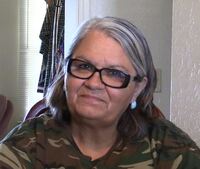 Oral history interview with Norene Starr
Norene Starr (Cheyenne), a 1978 graduate of Chilocco Indian Agricultural School, recalls moving between foster homes until as a teenager she was adopted by the parents of a Chilocco friend. She talks about her time at the school and time in the Army and National Guard. Starr discusses her journey after being sexually assaulted from mental health challenges and drug addiction to her current work helping to connect people with services they need.
-
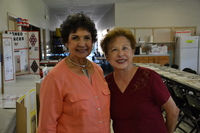 Oral history interview with Nancy Elliott and Ramona McCready
Nancy Elliott (Cherokee) and Ramona McCready (Choctaw), 1957 graduates of Chilocco Indian Agricultural School, fondly recall their memories as best friends at the school. McCready reminisces over how she met Elliott, and the two laugh as they remember the practical jokes they used to play on each other and with the other students. They each go on to discuss where their lives after graduation and about their long distance friendship.
-
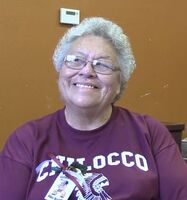 Oral history interview with Matthew and Caroline Tiger
Matthew and Caroline Tiger (Creek/Arapaho), 1966 graduates of Chilocco Indian Agricultural School, have been married for over fifty years and recall their time with each other at Chilocco. They discuss how dating worked at a boarding school, various social activities and functions that they would attend, what their work details were, and the friends that they made there. They close out with commenting on how Chilocco has positively impacted their lives and how they would like to see the campus restored to its former glory.
-
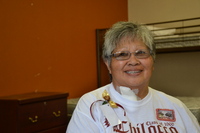 Oral history interview with Dolly BaDonie
Dolly BaDonie (Yakama), a 1968 graduate of Chilocco Indian Agricultural School, discusses her early life on a Yakama Indian reservation in the state of Washington and the difficult time she had in convincing her mother to let her attend Chilocco. She talks about her time at Chilocco and her ""detail"" as a teacher's assistant, which later led to her having a long career in clerical work. She closes by discussing the Chilocco cemetery and how much she loves coming back to Newkirk for the annual class reunions.
-
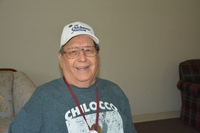 Oral history interview with Billy May
Billy May (Chickasaw), a 1951 graduate of Chilocco Indian Agricultural School, discusses his early life living in California and his time as a student at the school. He talks about joining the Marine Corps during the Korean War and being stationed in Pearl Harbor and shares an anecdote of bringing his infant daughter from Hawaii to Oklahoma. He ends by discussing more of his military service and his sons' experiences in the military as well.
-
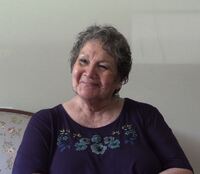 Oral history interview with Thelma McCarty
Thelma McCarty (Ponca), a 1955 graduate of Chilocco Indian Agricultural School, discusses her upbringing in rural Oklahoma and her fond memories of Chilocco. She describes her adjustment to boarding school, her vocational choice of cosmetology, meeting her future husband, as well as some of the trouble she got into as a teenager. McCarty recalls the early years of marriage and the moves that she was required to make for work. She comments on the closing of Chilocco and concludes by adding tidbits about the yearly reunions.
-
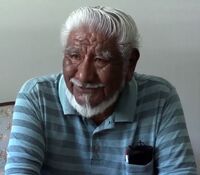 Oral history interview with George Miguel
George Miguel (Tohono O'odham), a 1960 graduate of Chilocco Indian Agricultural School, describes his time at the school and his journey getting there. He discusses his service in the United States National Guard and his career in construction. Miguel also talks some about his college experience and closes with remarks on being the president of the Chilocco Alumni Association.
-
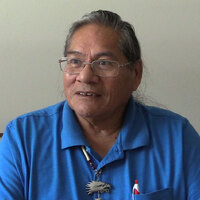 Oral history interview with James Paul Noel
James Paul Noel (Cherokee/Choctaw), a 1965 graduate of Chilocco Indian Agricultural School, talks about his childhood and the problems he faced as a Native American student in public schools. He explains how he came to enroll in Chilocco and how he felt at home there immediately. Noel describes his experiences on campus through sports, military service, and vocational training in printing. He mentions his time in the military, his passion for art, and the value of school reunions.
-
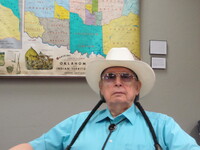 Oral history interview with Don Patterson
Don Patterson (Tonkawa) attended Chilocco Indian Agricultural School a few years before deciding to volunteer for military service in 1957. He reminisces about his student days and talks about his involvement in many different clubs and organizations, his favorite teachers, and his time in the automobile mechanics courses. Patterson later goes on to discuss enlisting in the United States Air Force and the experiences he had with that, as well as his leadership of the Fort Oakland Drum Group.
-
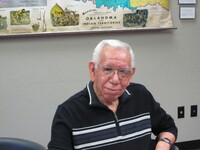 Oral history interview with Garland Kent
Garland Kent (Otoe/Ponca/Iowa), a 1958 graduate of Chilocco Indian Agricultural School, looks back fondly on his time as a student there. He discusses the activities he was involved in, the various chores he had to do on the school farm, and meeting his future wife in the ninth grade. Garland then goes on to discuss his recent retirement from his career at ConocoPhillips where he was a part of the Emergency Response Team. He ends with sharing his experiences about being the coordinator of the Chilocco Powwow for the past several years.
-
 Amplified Oklahoma podcast episode 19: Chilocco Military Veterans
Opened in 1884, Chilocco Indian School was one of the largest federally-funded boarding schools for Native American youth in the country. Located twenty miles north of Ponca City, Oklahoma, the school offered a half academic / half vocational curriculum, focused on assimilating Native students into the dominant culture. Like most boarding schools, Chilocco went through different phases of development, reflecting changes in the federal policy towards Native Americans. These changes were often prompted by the efforts of Native educators, community workers and activists, and shifting attitudes within the larger society. Throughout these shifts, however, the school’s status as a National Guard center as well as boarding school made it unique. This month on Amplified Oklahoma, we're focusing on military veterans who attended the school. We’ll hear interview excerpts with Wes Studi and Charles LeClair from the Oklahoma Oral History Research Program's archives. Later, former superintendent Jim Baker shares more about his involvement with alumni, especially in preserving the history of the school.
-
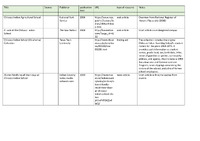 Chilocco History Project Research File
A list of online resources of Chilocco history related material available online. This list was compiled by student researcher in summer 2017 and referenced and tweaked throughout the three years of this research project.
-
"They called it prairie light" : oral histories from Chilocco Indian agricultrual boarding school
-
Chilocco Survivors: Contested Discourses in Narrative Responses to Ponca Alcohol Abuse
This paper discusses the effects of the Chilocco Indian School boarding school experience on members of the Ponca Tribe of Oklahoma through the lens of attitudes towards alcohol use and abuse. I argue that narrative storytelling reveals conflicting discourses that grapple with whether derivation of the Chilocco ideology of personal responsibility for alcohol is acceptable or beneficial. Drawing on Singer et al (1992) and Spicer (1997, 2006), I utilize an analytical framework that links the realities of political economy with the effects of communal transmission of historical trauma across generations. I argue that contestation illustrates that Ogbu?s (1990, 1992) theory of cultural inversion is not wholly applicable. Some alumnae find the American ideal of personal responsibility useful; others disparage the application of personal responsibility to alcohol abuse as another American attack. I conclude that both approaches are politically motivated acts aimed at eliminating alcohol abuse.
-
The study of the mathematics program at the Chilocco Indian Agricultural School
-
Chilocco Indian Agricultural School: A study in assimilation and education
-
Chilocco Indian Boarding School: tool for assimiliation, home for Indian youth
Chilocco Indian School, which opened in 1884, served the educational needs of American Indian students from all over the United States for nearly one hundred years. Its story is one of students and faculty working together to produce what was considered by many of its students one of the finest non-reservation federal Indian boarding schools in the nation. Its story is also a reflection of federal intervention, not always positive, in the education of Indian youth. Three works about Chilocco have been written to date. Larry Bradfield wrote a masters thesis that was a mainly administrative account from 1884 to 1955. Kimberly Tsianina Lomawaima wrote her doctoral dissertation, later published as a book, on the period from 1920 to 1940, based on oral histories. Dr. Leon Wall, former superintendent of Chilocco, in 1979 published a defense of his tenure at Chilocco. This project is an attempt to utilize administrative, federal government, and especially student accounts of Chilocco's nearly one- hundred-year history to reach some sort of balanced history of the school.
-
"It was an Indian School": an ethnographic account of Cherokee women who attended Chilocco Indian Agricutlural School, 1950-1959
-
A pattern of high school education for the Chilocco Indian school
-
Chilocco: Health conditions at a Natie American boarding school, 1884-1930
-
A history of Chilocco Indian School
-
 Native American Boarding School Curriculum:
Chilocco Indian Agricultural School
6th to 8th grade and 9th to 12th grade
This curriculum unit contains a series lessons targeted at 6th- 8th and 9th -12th grade students in Oklahoma and beyond. The curriculum units are devised to elicit critical thinking, like that promoted by the Stanford History Education Group, teach appropriate skills based on national standards, and promote an Indigenous perspective of history. This work also relies on essential questions as a framework to guide the student through the inquiry unit.
The purpose of this curriculum is to meet the needs of the OOHRP and the Chilocco Indian Agriculture School in promoting the history and experiences documented in archival and oral history research. This proposed curriculum engages students, through inquiry, with the evolving history and experiences at Chilocco. Through a historical lens, this curriculum balances its focus on assimilative practices of the federal government, including militarization of the boarding school space with an evolving perspective of how Chilocco, in later years, became a space reclaimed by students and tribes to further their educational values and contribute to the growth of their tribes and the state.
-
 Native American Boarding School Curriculum: Chilocco Indian Boarding School
K-2nd and 3rd-5th Grades aligned to C3 Standards
Intro
These lesson plans are targeted to elementary students from grades Kindergarten through second and from grades three through five. The standards align to the C3 Framework Standards. The lessons are designed as stand-alone inquiry lessons, allowing the educators to use one or both lessons. The lessons draw from primary and secondary resources, including oral histories from alumni of Chilocco Indian Boarding School in northern Oklahoma.
-
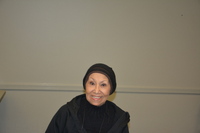 Oral history interview with Judy Haumpy
Judy Haumpy (Muscogee Creek, Absentee Shawnee), a 1965 graduate of Chilocco Indian Agricultural School, talks about her life before, during, and after attending the school. She discusses the many different activities she participated in as a student such as cheerleading. Haumpy mentions some of the work experiences she had while at Chilocco that helped prepare her for a career. She explains educational pursuits and describes the work of helping others she has done with the Creek Nation.
-
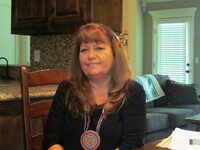 Oral history interview with Denise Jones
Denise Jones (Ponca, Absentee Shawnee), a fourth generation Chilocco student, attended Chilocco Indian Agricultural School for the 1979/1980 school year. She talks about her family's history with the school and her decision to enroll there. Jones describes a few of her experiences and explains her educational path. She mentions the many different types of jobs she has had and some of her entrepreneurial contributions. Jones also comments on how close all the students were at Chilocco and the importance of school reunions.