Items
Template
Oral History
-
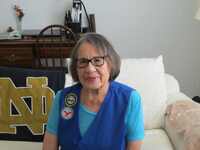 Oral history interview with Doris Lasley Doris Lasley (Creek), a 1955 graduate of Chilocco Indian Agricultural School, discusses her time at Chilocco and her decision to attend nursing school and join the U.S. Air Force. She talks about her experience being stationed in Arkansas during the Vietnam War as well as some of the other jobs she held over her career. Lasley discusses her involvement in local women veterans organizations and what she enjoys about attending the Chilocco reunions.
-
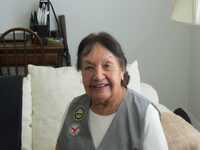 Oral history interview with Marjorie Lasley Marjorie Lasley discusses her time at Chilocco Indian Agricultural School and her decision to attend nursing school and serve in the U.S. Navy. She talks about the various places she was stationed, including Virginia and New York, and describes why she returns for the Chilocco class reunions
-
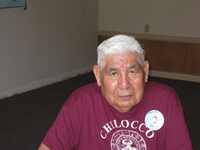 Oral history interview with Leroy Sakiestewa Leroy Sakiestewa (Hopi), a 1953 graduate of Chilocco Indian Agricultural School, discusses his childhood growing up in Tuba City, Arizona between the Navajo and Hopi reservations. He describes his family's Hopi heritage and how he didn't get more involved in learning the language and culture until after marrying his wife, who is also Hopi. He talks about his time at Chilocco and fondly recalls teachers, lifelong friends, extracurricular activities, and the impact of his plumbing education on his later career as a plumber and facilities manager at an on-reservation boarding school. Sakiestewa also discusses his experience enlisting in the Army as a paratrooper.
-
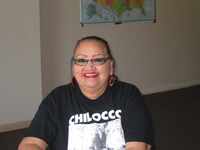 Oral history interview with Darlene Harjo Darlene Harjo (Ponca), a 1971 graduate of Chilocco Indian Agricultural School, talks about her family's history and connection to the school as well as her own experience attending Chilocco. She describes some of the various activities that she was involved in during her time at Chilocco such as cheerleading, choir, and being named the 1969 Chilocco Powwow Princess. She reflects on the impact of the school on her life and the importance of remembering it for future generations.
-
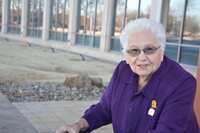 Oral history interview with Norene Durant Norene Durant (Cherokee and Creek), a graduate of Chilocco Indian Agricultural School, talks about growing up in Sperry, Oklahoma on her mother's original land allotment in the Cherokee Nation. Born into a farming family with a mother who only spoke Shawnee, she describes how she ended up at Chilocco in 1943. Durant recalls the tragic death of her mother after her freshman year, taking a year out of school to take care of her, and how her mother encouraged her to graduate from Chilocco. She talks about adjusting to Chilocco and recalls the dormitories, work opportunities, and gender differences in the roles and coursework available at the school. Durant describes meeting her future husband Albert at Chilocco after he returned from the war in 1947 and eventually getting married and moving to Dallas.
-
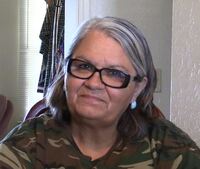 Oral history interview with Norene Starr Norene Starr (Cheyenne), a 1978 graduate of Chilocco Indian Agricultural School, recalls moving between foster homes until as a teenager she was adopted by the parents of a Chilocco friend. She talks about her time at the school and time in the Army and National Guard. Starr discusses her journey after being sexually assaulted from mental health challenges and drug addiction to her current work helping to connect people with services they need.
-
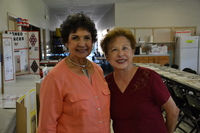 Oral history interview with Nancy Elliott and Ramona McCready Nancy Elliott (Cherokee) and Ramona McCready (Choctaw), 1957 graduates of Chilocco Indian Agricultural School, fondly recall their memories as best friends at the school. McCready reminisces over how she met Elliott, and the two laugh as they remember the practical jokes they used to play on each other and with the other students. They each go on to discuss where their lives after graduation and about their long distance friendship.
-
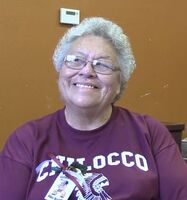 Oral history interview with Matthew and Caroline Tiger Matthew and Caroline Tiger (Creek/Arapaho), 1966 graduates of Chilocco Indian Agricultural School, have been married for over fifty years and recall their time with each other at Chilocco. They discuss how dating worked at a boarding school, various social activities and functions that they would attend, what their work details were, and the friends that they made there. They close out with commenting on how Chilocco has positively impacted their lives and how they would like to see the campus restored to its former glory.
-
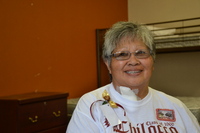 Oral history interview with Dolly BaDonie Dolly BaDonie (Yakama), a 1968 graduate of Chilocco Indian Agricultural School, discusses her early life on a Yakama Indian reservation in the state of Washington and the difficult time she had in convincing her mother to let her attend Chilocco. She talks about her time at Chilocco and her ""detail"" as a teacher's assistant, which later led to her having a long career in clerical work. She closes by discussing the Chilocco cemetery and how much she loves coming back to Newkirk for the annual class reunions.
-
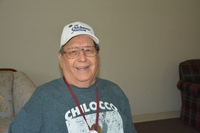 Oral history interview with Billy May Billy May (Chickasaw), a 1951 graduate of Chilocco Indian Agricultural School, discusses his early life living in California and his time as a student at the school. He talks about joining the Marine Corps during the Korean War and being stationed in Pearl Harbor and shares an anecdote of bringing his infant daughter from Hawaii to Oklahoma. He ends by discussing more of his military service and his sons' experiences in the military as well.
-
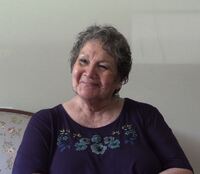 Oral history interview with Thelma McCarty Thelma McCarty (Ponca), a 1955 graduate of Chilocco Indian Agricultural School, discusses her upbringing in rural Oklahoma and her fond memories of Chilocco. She describes her adjustment to boarding school, her vocational choice of cosmetology, meeting her future husband, as well as some of the trouble she got into as a teenager. McCarty recalls the early years of marriage and the moves that she was required to make for work. She comments on the closing of Chilocco and concludes by adding tidbits about the yearly reunions.
-
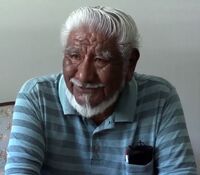 Oral history interview with George Miguel George Miguel (Tohono O'odham), a 1960 graduate of Chilocco Indian Agricultural School, describes his time at the school and his journey getting there. He discusses his service in the United States National Guard and his career in construction. Miguel also talks some about his college experience and closes with remarks on being the president of the Chilocco Alumni Association.
-
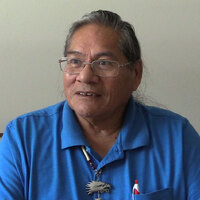 Oral history interview with James Paul Noel James Paul Noel (Cherokee/Choctaw), a 1965 graduate of Chilocco Indian Agricultural School, talks about his childhood and the problems he faced as a Native American student in public schools. He explains how he came to enroll in Chilocco and how he felt at home there immediately. Noel describes his experiences on campus through sports, military service, and vocational training in printing. He mentions his time in the military, his passion for art, and the value of school reunions.
-
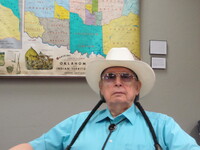 Oral history interview with Don Patterson Don Patterson (Tonkawa) attended Chilocco Indian Agricultural School a few years before deciding to volunteer for military service in 1957. He reminisces about his student days and talks about his involvement in many different clubs and organizations, his favorite teachers, and his time in the automobile mechanics courses. Patterson later goes on to discuss enlisting in the United States Air Force and the experiences he had with that, as well as his leadership of the Fort Oakland Drum Group.
-
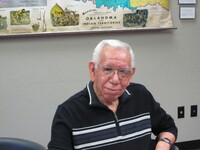 Oral history interview with Garland Kent Garland Kent (Otoe/Ponca/Iowa), a 1958 graduate of Chilocco Indian Agricultural School, looks back fondly on his time as a student there. He discusses the activities he was involved in, the various chores he had to do on the school farm, and meeting his future wife in the ninth grade. Garland then goes on to discuss his recent retirement from his career at ConocoPhillips where he was a part of the Emergency Response Team. He ends with sharing his experiences about being the coordinator of the Chilocco Powwow for the past several years.
-
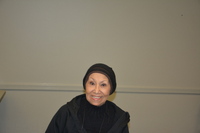 Oral history interview with Judy Haumpy Judy Haumpy (Muscogee Creek, Absentee Shawnee), a 1965 graduate of Chilocco Indian Agricultural School, talks about her life before, during, and after attending the school. She discusses the many different activities she participated in as a student such as cheerleading. Haumpy mentions some of the work experiences she had while at Chilocco that helped prepare her for a career. She explains educational pursuits and describes the work of helping others she has done with the Creek Nation.
-
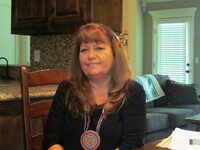 Oral history interview with Denise Jones Denise Jones (Ponca, Absentee Shawnee), a fourth generation Chilocco student, attended Chilocco Indian Agricultural School for the 1979/1980 school year. She talks about her family's history with the school and her decision to enroll there. Jones describes a few of her experiences and explains her educational path. She mentions the many different types of jobs she has had and some of her entrepreneurial contributions. Jones also comments on how close all the students were at Chilocco and the importance of school reunions.
-
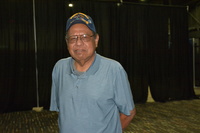 Oral history interview with Woody Kinney Woody Kinney attended Chilocco Indian Agricultural School as a postgraduate from 1961 to 1963 where he focused on the printing trade for his vocational education. He talks about some of his professors and working in the school print shop. Kinney shares why he enlisted in the Air Force and recalls some of the duties he had as part of the air police and the base police. He discusses his life after the military and before beginning his fifty-year career with the Indian Health Service where he retired as director of Human Resources.
-
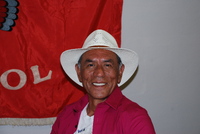 Oral history interview with Wes Studi Wes Studi (Cherokee), a 1964 graduate of Chilocco Indian Agricultural School, discusses his path to and through Chilocco. He mentions some of the duties and experiences he had during his time at the school and how Cherokee was his first language. Studi talks about his military career and shares a few of his memories from his tours in Vietnam. He connects the regimented requirements of life at Chilocco with the regimented requirements of life in the U.S. Army. Studi also acknowledges how much he enjoys coming back to Oklahoma and to Chilocco as he continues his successful career in film.
-
 Oral history interview with Jim Baker Jim Baker attended Chilocco Indian Agricultural School and later served as superintendent of the school. He shares some of his experiences at Chilocco as a student and as the superintendent. Baker explains the history of the school and its relation to the National Guard. He mentions challenges he faced as superintendent and talks about various programs he implemented. Baker also discusses some of the outside opinions and influences on the school. Lastly, he describes why Chilocco is special and why so many former students think back fondly on their time at Chilocco.
-
 Oral history interview with Claudine King Claudine King (Chickasaw), a 1952 graduate of Chilocco Indian Agricultural School, talks about transferring to the school and shares some of her memories from her time as a student there. She describes the environment and the diversity of students. King discusses her life after graduating which later included returning to Chilocco as an employee. She compares her time as a student to her time as an employee and discusses some of the issues the school was facing as its closure grew closer. She also talks about how the alumni have helped keep the school's legacy alive and the positive impact Chilocco has had on most of its students.
-
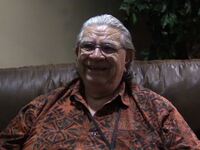 Oral history interview with Charles Chupco Charles Chupco (Creek), a 1960 graduate of Chilocco Indian Agricultural School, talks about his time on campus and some of his memories as a student, like working in auto mechanics and participating in multiple sports. He mentions his Creek heritage and how it was nice having Creek classmates. Chupco shares why he joined the Navy after briefly being part of the National Guard at Chilocco. He discusses his twenty-year military career, serving on various ships in different locations. Chupco also talks about his post-military career and some of his duties in technical operations for a school district.
-
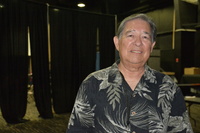 Oral history interview with Keith Franklin Keith Franklin (Sac and Fox), a 1957 graduate of Chilocco Indian Agricultural School, talks about his journey to Chilocco and some of his early challenges with boarding school life. He describes a few of his memories from his time there as a student and the vocational work he had to do. Franklin enlisted in the U.S. Air Force and goes through his twenty-three-year military career, commenting on experiences he had and the things that he saw, both good and bad. He mentions some of the more dangerous parts of his military duties and how that danger affected him personally and those around him. Franklin shares his opinion about his military duties and the impact of the U.S. in the areas he was serving in, specifically Guam and Thailand. He also talks about how his time at Chilocco affected his time in the military.
-
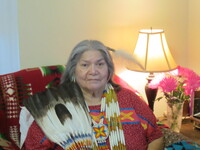 Oral history interview with Virginia McDonald Rush Virginia McDonald Rush (Ponca), a 1956 graduate of Chilocco Indian Agricultural School, talks about her time at Chilocco and some of her activities, like band and the cosmetology program. She shares why she joined the military and explains how well prepared she was for it because of Chilocco. Rush describes some of her military experiences which included playing softball. She discusses her later career as an Indian education coordinator. She mentions some of the important people in her life and her current involvement with Chilocco.
-
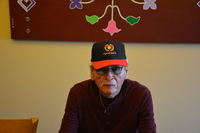 Oral history interview with Robert Buzzard Robert Buzzard (Cherokee), a 1957 graduate of Chilocco Indian Agricultural School, talks about spending his youth near Chilocco before enrolling in the school in the ninth grade. He describes what life was like on campus and some of his memories from his time there, like helping build the football stadium bleachers. Buzzard shares how he joined the Air Force and some of the duties he had as an aircraft mechanic. He discusses his long career with a power plant where he worked his way up to operating foreman before retiring. Buzzard also talks about his continued commitment and involvement with Chilocco.